
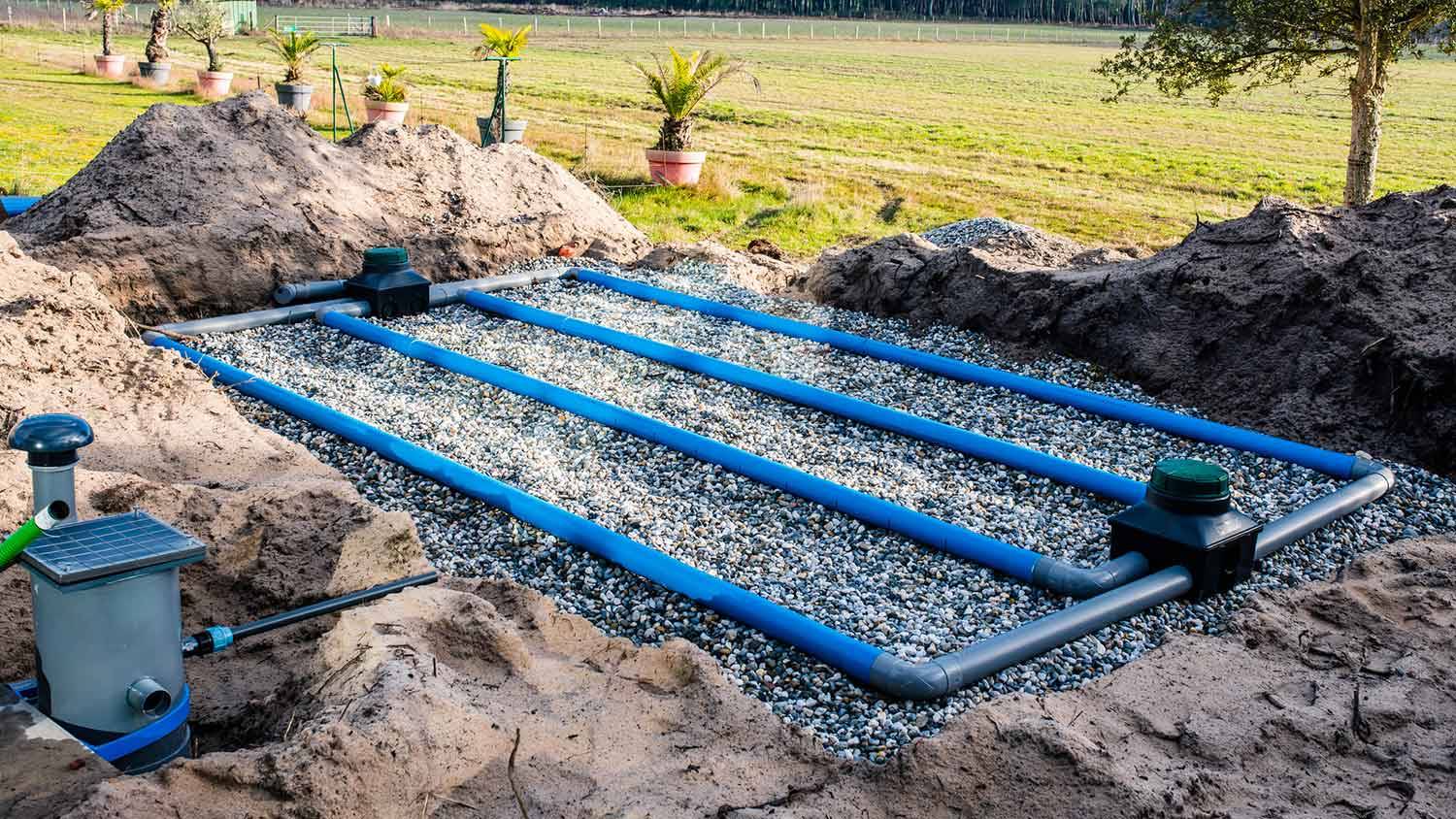
/ SERVICE · DRAIN FIELD
Septic DrainField Repair
Soggy ground, standing water, sewage odors outdoors, or slow drains throughout the house are all signs your drain field may be in trouble. We diagnose and restore older or compromised drain fields throughout the region.
Don't Ignore the Warning Signs.
Your drain field is the final stage of your septic system — where treated wastewater disperses safely into the soil. When it fails, the consequences range from unpleasant to a full environmental and health hazard. The good news: not every drain field problem means full replacement. Experienced diagnosis and targeted intervention can often restore function at a fraction of the replacement cost.
Signs of a Drain Field Problem
Drain field failure often develops slowly before becoming obvious. Knowing the warning signs early can save thousands of dollars and a lot of stress.
- Soggy or spongy ground over the drain field area
- Standing water or puddles that don't drain after dry weather
- Sewage odors outside, especially near the drain field
- Slow drains throughout the entire home (not just one fixture)
- Backups or gurgling that gets worse after heavy rain
- Unusually lush, green grass over the drain field in dry weather
What You Get
Accurate Diagnosis First
We identify the root cause — whether it's hydraulic overload, biomat buildup, soil compaction, or structural failure — before recommending any repair.
Restoration Before Replacement
We explore all options to restore your existing system before recommending full replacement. Targeted repairs are often far more affordable.
Regulatory Compliance
Drain field work often involves health department permits. We manage the documentation and compliance requirements so you don't have to.
Complete Repair Capability
From rerouting distribution to full lateral replacement, our team handles the full scope of drain field rehabilitation.
How It Works
Assess the system
We evaluate the full system — tank condition, distribution box, and drain field — to understand what's happening and why.
Diagnose the cause
We identify whether the problem is hydraulic overload, biomat accumulation, physical damage, or soil failure — the cause determines the right solution.
Recommend & plan
We present your options clearly, with costs, so you can make an informed decision. We always start with the least invasive effective solution.
Repair & restore
We complete the repair — which may include resting the field, rerouting flow, replacing laterals, or more — and verify performance before we leave.
Common Questions
Not always replacement. Many drain field problems — especially those caught early — can be addressed with targeted repairs, resting periods, or flow rerouting. We always recommend the most cost-effective solution that actually works.
Worried about your drain field? Get a diagnosis before it becomes an emergency.